 By Bemi Brooks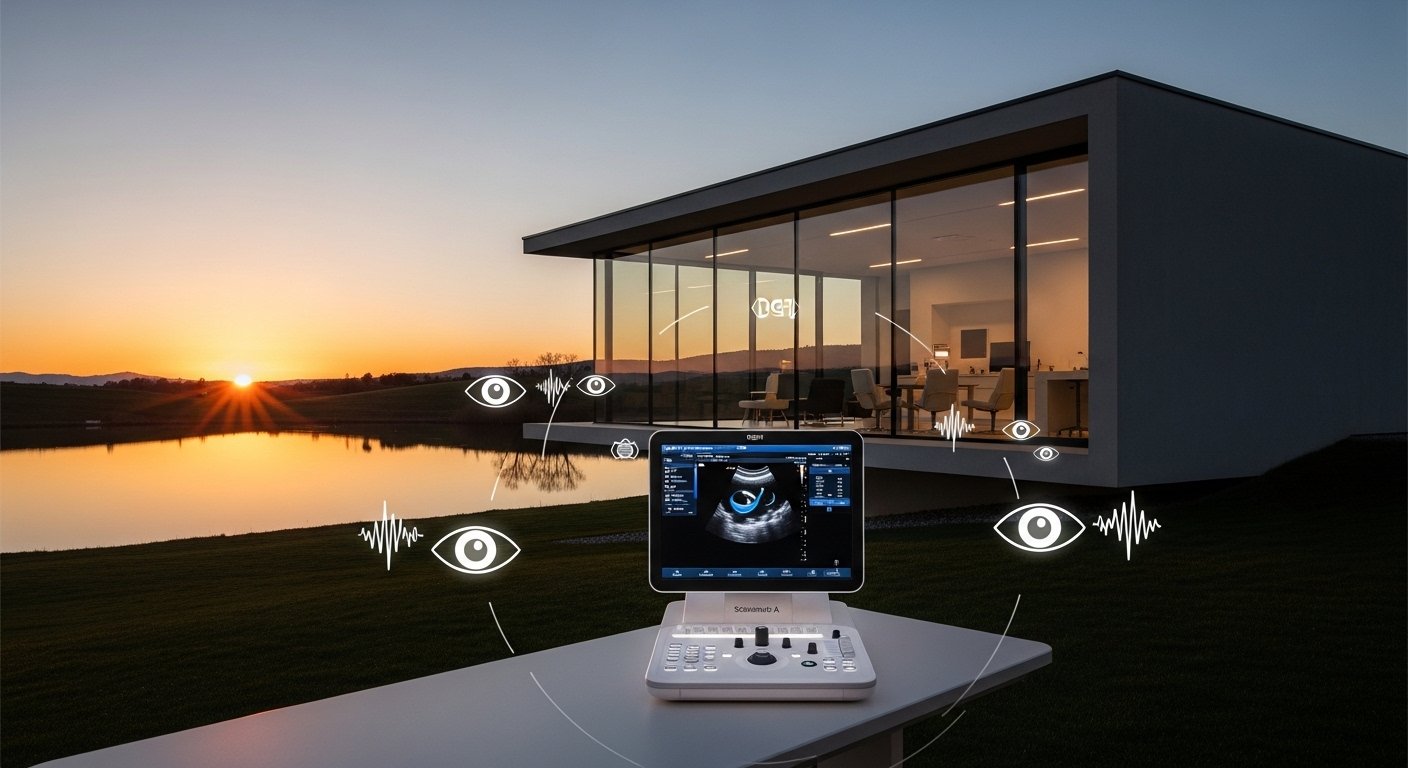
Have you ever faced a challenging cataract case where optical biometry just would not cut it, leaving you second-guessing your IOL power selection? In those moments, turning to reliable ultrasonic tools like the DGH A (Scanmate A) can make all the difference, offering precision even through dense media.
Research suggests that accurate axial length measurements are crucial for minimizing postoperative refractive surprises, and tools like the DGH A provide consistent results with features designed to reduce errors from corneal compression. It seems likely that combining immersion techniques with advanced software can enhance outcomes, though individual patient factors always play a role. The evidence leans toward portable ultrasonic biometers being particularly useful in settings where mobility and reliability matter, such as multi-clinic practices or for patients with media opacities.
- Portability and Usability: The DGH A connects via USB to any Windows computer, making it ideal for on-the-go use without sacrificing accuracy.
- Accuracy in Tough Cases: It excels in measuring axial length through dense cataracts, where optical methods may fail, with a resolution of 0.01 mm.
- IOL Optimization: Built-in formulas allow for quick calculations, and post-operative data can refine lens constants for better future predictions.
- Potential Drawbacks: Ultrasound typically measures slightly shorter axial lengths compared to optical biometry, so cross-verification is wise in mixed workflows.
To integrate the DGH A into your practice, start by installing the Scanmate software on a compatible PC (Windows 10 or higher). For measurements, choose between contact or immersion modes based on patient needs, immersion often preferred to avoid compression. Enter patient data, acquire scans with real-time feedback, and run IOL calculations using formulas like SRK/T or Haigis.
Debates around ultrasound versus optical biometry highlight that while optical is faster for clear media, ultrasonic methods like DGH A are indispensable for opacities, balancing speed with reliability. Some studies note variability in measurements between devices, underscoring the need for consistent use and personalization. We recognize that no tool is perfect, and combining modalities can offer the most comprehensive approach.
In the fast-paced world of ophthalmology, getting intraocular lens (IOL) calculations right is not just about numbers, it is about giving patients clearer vision and fewer surprises after surgery. That is where the DGH A, or Scanmate A, comes into play as a game-changer for eye care professionals. This portable ultrasonic ophthalmic biometer tackles common challenges like inaccurate axial length measurements due to corneal deformation, offering a blend of accuracy, portability, and user-friendly software that fits seamlessly into clinical workflows. Let us dive into how you can leverage this technology to optimize your IOL calculations, drawing from real-world scenarios and expert insights.
Picture this: You are in clinic with a patient like Mrs. Thompson, who has a dense cataract that scatters light, making optical biometry unreliable. Instead of rescheduling or settling for estimates, you pull out the DGH A, connect it to your laptop, and get precise measurements in minutes. This tool, developed by DGH Technology, combines proven A-scan biometry with modern software, helping clinicians like you achieve better surgical planning. As we explore its features, keep in mind that while it shines in portability and accuracy, it is essential to calibrate it regularly and cross-check with other methods for the best results.
The DGH A, specifically the Scanmate 6000, is an ultra-portable A-scan biometry device that measures key ocular dimensions: axial length (from 15.00 mm to 40.00 mm), anterior chamber depth (2.00 mm to 6.00 mm), and lens thickness (2.00 mm to 7.50 mm). It uses a 10 MHz focused probe with a fixation LED to ensure patient cooperation, and its USB interface makes it compatible with any Windows-based computer. What sets it apart? Its real-time waveform analysis provides immediate feedback, ranking alignments with a star system (up to three stars for optimal scans), which helps avoid errors right away.
In practice, this means fewer retakes. For instance, in a busy optometry office, technicians can quickly train on it, thanks to audible cues that guide probe placement. The device’s corneal compression lockout feature is a standout: It detects and prevents measurements if the probe presses too hard on the cornea, adjustable via sensitivity settings to suit different users. This addresses a common pitfall in contact biometry, where even slight pressure can shorten axial length readings by 0.1 mm or more, potentially leading to IOL power errors of about 0.25 diopters.
Let us break down what makes the DGH A a must-have for ophthalmic diagnostic imaging. Its portability weighs in at under a pound for the unit alone, fitting into a custom carrying case with accessories like the Prager immersion shell and calibration block. This is perfect for medical facility managers juggling multiple sites or for students learning in varied environments.
The software is where the magic happens. It supports automatic and manual modes, saving videos of scans for later review, which is great for teaching or auditing. For myopia management, it even generates axial length progression reports, charting changes over time to monitor young patients. Integration with electronic medical records (EMR) is straightforward, allowing export of reports as PDFs or direct database syncing.
Here is a quick comparison of its specs:
| Feature | Details |
|---|---|
| Resolution | 0.01 mm |
| Repeatability | ±0.03 mm STDEV (immersion mode) |
| Probe Type | 10 MHz focused, internal single-element |
| Connectivity | USB 2.0, Windows 10+ compatible |
| Weight | <1 lb (unit), 2 lbs complete |
| Modes | Contact or immersion |
This table highlights why it is favored for reliability in clinical settings.
One of the DGH A’s strengths is its flexibility in measurement methods. The contact method involves lightly touching the probe to the anesthetized cornea, guided by audible feedback to maintain proper pressure. However, it risks corneal compression, which the lockout feature mitigates by halting scans if compression is detected.
In contrast, the immersion method uses the Prager shell: Fill it with saline or water, insert the probe without touching the eye, and measure through the fluid bath. This eliminates compression entirely, leading to more consistent axial length measurements, especially in sensitive or irregular corneas. Studies show immersion reduces variability, with repeatability often better than contact.
Q: Is immersion harder for beginners? A: Not really, once you practice filling the shell and positioning the patient supine, it becomes routine, and the software’s waveform analysis confirms good scans.
Consider a scenario with a post-LASIK patient: Immersion helps avoid artifacts from altered corneal shape, improving IOL accuracy.
To get the most out of the DGH A for axial length measurement, follow these steps:
- Setup: Connect the USB module to your PC, launch Scanmate software, and enter patient details (name, eye, refraction).
- Choose Mode: Select immersion for precision or contact for speed. For immersion, attach the Prager shell, fill with balanced salt solution, and insert the probe to the stop point.
- Acquire Scans: Align the probe using the fixation light; listen for tones indicating good alignment. Aim for three-star ratings. The software analyzes waveforms in real-time, flagging issues like misalignment.
- Review and Save: Check the waveform for clear spikes (cornea, lens, retina), save the video, and average multiple scans for accuracy.
- Troubleshoot: If compression occurs in contact mode, ease pressure until the lockout clears. For dense media, switch to manual mode to gate echoes precisely.
This process ensures reliable data, with the device’s 0.01 mm resolution minimizing errors that could affect IOL power.
The Scanmate A software shines in IOL calculations, supporting formulas like SRK II, Binkhorst, SRK/T, Holladay 1, Hoffer Q, and Haigis. For post-refractive eyes, it includes specialized options like Double K or Shammas-derived corrections. You can configure up to three preferred IOLs per doctor, and the system auto-optimizes constants based on post-op outcomes.
In action: After measurements, click the IOL icon, input keratometry and target refraction, and compare powers across formulas. For a patient like Mr. Lee with prior RK, use the post-refractive calculator to adjust corneal power, potentially avoiding over-correction. The software generates reports showing emmetropia and ametropia options, helping you discuss plans with patients.
A handy table for formula selection:
| Eye Type | Recommended Formulas |
|---|---|
| Normal | SRK/T, Holladay 1 |
| Short (<22 mm) | Hoffer Q |
| Long (>26 mm) | SRK/T, Haigis |
| Post-Refractive | Double K, Shammas |
Personalization refines these over time, using your surgical data to tweak constants for better predictability.
To optimize, integrate the DGH A early in pre-op assessments. Train technicians on waveform analysis to spot poor scans quickly, like flat retinal spikes indicating misalignment. For portability, use it in satellite clinics; its networkable database keeps records synced.
Q: How does it handle pseudophakic eyes? A: Select the appropriate vitreous type (e.g., silicone oil) to adjust velocities, ensuring accurate measurements.
In cataract surgery prep, pair it with optical biometry for validation: Ultrasound often reads shorter by 0.4 mm, so adjust formulas accordingly. Regular software updates from DGH keep features current.
The DGH A’s accuracy translates to fewer refractive surprises, especially in dense cataract cases where optical tools falter. Its immersion shell technique minimizes patient discomfort and errors, leading to better IOL power selection and outcomes. For facility managers, its affordability and low maintenance make it a smart investment, while students appreciate its intuitive interface for learning biometry basics.
In one clinic example, switching to DGH A reduced IOL exchange rates by focusing on immersion for high-risk patients. Plus, its myopia tracking aids pediatric care, plotting growth to inform interventions.
The software’s database is searchable and export-friendly, compatible with most EMR systems. Generate one-click reports summarizing measurements, calculations, and comparisons, then upload directly. This streamlines documentation, saving time in busy practices.
For advanced users, customize velocities for specific eye types or export data for research. If you are in a networked setup, install on multiple machines without extra licenses.
Wrapping up, the DGH A empowers you to tackle IOL calculations with confidence, blending technical prowess with practical ease. Whether you are an ophthalmologist fine-tuning surgeries or a technician streamlining workflows, this tool delivers value.
- Acquire the DGH A and train your team on immersion techniques for immediate accuracy gains.
- Personalize IOL constants using post-op data to refine predictions over time.
- Integrate with your EMR for seamless reporting and track axial length in myopia cases.
What are your experiences with ultrasonic biometry? Share in the comments below!
You May Also Like: TimeWarp TaskUs: A Complete Guide to Mastering Your Workforce Portal
What are the main DGH A Scanmate 6000 features?
It includes portable USB connectivity, real-time feedback, immersion and contact modes, and IOL formulas like Haigis.
How does DGH A improve accurate axial length measurement?
Through waveform analysis, compression lockout, and immersion to avoid deformation, achieving 0.01 mm resolution.
What is the DGH A immersion shell technique?
Fill the Prager shell with fluid, insert the probe without eye contact, and scan for compression-free results.
What benefits does DGH A offer for cataract surgery?
It provides reliable biometry in opaque media, optimizes IOL power, and reduces refractive errors.
How does DGH A software integrate with EMR?
It exports reports as PDFs and supports networked databases for easy syncing.
Is DGH A suitable as a portable ultrasonic biometer?
Yes, its lightweight design and carrying case make it ideal for multi-site use.
Can DGH A handle post-refractive IOL calculations?
Absolutely, with specialized formulas like Double K for adjusted corneal power.